What Choices do you have?
To meet the many kinds of needs that people have, a number
of different housing styles and types have developed over the years. Your
individual requirements and your income level will govern the housing
type which is most suitable for you at the present time.
Types of Housing Structures
Single family, detached house 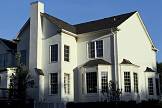
A detached house is one which has no common walls with any other residential
structure, resting on its own land with a front, rear and side yards.
It may be any size from a small, one storey bungalow to a huge mansion.
Duplex
A duplex is two separate dwellings which are attached either side-by-side
(a semi-detached house) or one unit above the other.
Townhouses
In British Columbia the term "townhouse" is usually used to
describe one of a group of dwellings (most often two storey) joined together
by common walls, each with its own entrance from the outside.
Apartment
An apartment is one of several dwellings (most often single storey dwellings
built one above the other) joined together by common walls, each having
its entrance from a common hall. The overall building containing the apartments
may be from three to 33 or more storeys.
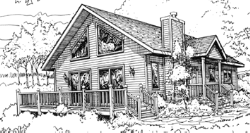 Mobile
or Manufactured Home Mobile
or Manufactured Home
A manufactured home is a factory-built residential structure designed
to be moved from one place to another, although wheels are not necessary.
It is often placed on a rented space (called a "pad") in a manufactured
home park.
Types of Housing Ownership
Freehold
A freehold interest (also known as a fee simple) is the more precise term
for what we ordinarily refer to as "ownership" of a property.
The owner of the freehold interest has full use and control of the land
and the buildings on it, subject to any rights of the Crown, local land-use
bylaws and any other restrictions in place at the time of purchase.
Leasehold
In some cases you might purchase the right to use a residential property
for a long, but limited, period of time. The owner of this right of use
has a type of ownership called a leasehold interest. This type of ownership
is used most often for townhouses or apartments built on city-owned land.
It is also used occasionally for single detached houses on farm land,
on Indian reserves and for apartments where the owner of the freehold
interest of an entire apartment block sells leasehold interests in individual
apartment units to other "owners".
Leasehold interests are frequently set for periods of
99 years, but regardless of the length of the original term, you will
only be able to purchase the remaining portion. Of course, the shorter
the remaining portion, the less you, or the person who eventually purchases
from you, will be willing to pay for the leasehold interest.
Condominium
It is a common error to believe that this term describes a particular
structural style of housing. You should be aware that it is actually a
type of housing ownership.
The condominium form of ownership (more formally called
a strata title ownership) is designed to provide exclusive use and ownership
of a specific housing unit (the strata lot) which is contained in a larger
property (the strata project), plus shared use and ownership of the common
areas such as halls, grounds, garages, elevators, etc.
This type of ownership is used for duplexes, apartment
blocks, townhouse complexes, warehouses and many other types of buildings.
Because ownership of the common space is shared, the owners also share
financial responsibility for its maintenance.
Cooperative
In the cooperative form of ownership, each owner owns a share in a company
or cooperative venture which, in turn, owns a property containing a number
of housing units. Each shareholder is assigned one particular unit in
which to reside.
|